
DwarfLab Draco Smart Telescope | DWARF-DRACO


DwarfLab Draco Smart Telescope | DWARF-DRACO
Products in the Same Family
Filter - SHO
Why Purchase from All-Star Telescope?
Free Expert Support
Whether you are a first timer needing help with setting up or an enthusiast that can't quite make that one thing work, our expert staff are ready to support your needs. With decades of knowledge and first hand experience we've been there and we can help you through it!
Stress Free, Secure Transactions
You can trust purchasing and delivery with All-Star Telescope. All of our transactions are 100% secure and Level 1 PCI DSS compliant thanks to Shopify's ShopPay platform. For additional protection, we insure 100% of the value of every shipment we make. If it get's lost during shipment, we replace it. If it gets damaged during shipment, we replace it. We make sure your product arrives exactly as you would expect it to; we promise.
We also ensure privacy protection. We never keep any of your credit card information on file and any of your personal data is stored according to our policies.
30 Day Return Policy
Buy with confidence knowing that we accept returns up to 30 days after purchase. We want you to have something you will actually use and we are confident that we keep good quality products in our store with No Junk.
Price Match Promise
Shipping around for the best price is tough, we make it easier by offering the best pricing in the market. But if you find a better price on an in-store item somewhere else we will match it!
Recommended Accessories
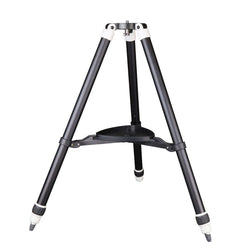
DwarfLab DWARF 3 Mini Tripod with Hydrauli...
This mini tripod is the perfect companion for you Dwarf III Smart Telescope. Sturdy extendable legs and easy alignment arm. Get up and running in n...
DwarfLab DWARF 3 Mini Tripod with Hydraulic Head | WT-6050


Product Description
Dward Draco Key Features
90mm Large Aperture
1/1.3-Inch Telephoto Camera
Built-in Guide Scope + 300-Second Single-Frame Exposures
CMOS Cooling for Lower Noise + Automatic Lens Dew Prevention
5.5kg Body
5-Hour Battery Life
IP56-Rated Protection
1/1.8-Inch Wide-Angle Camera
1/1.3-Inch Telephoto Camera
Simultaneous Dual-Lens Capture
-20°C to 45°C Operating Range
Rotating CMOS
Free-Angle Composition
Accessories
Choosing Your Draco
Standard Edition
SHO Edition
Version Differences
-
Standard Edition: built-in solar filter for solar imaging.
-
SHO Edition: external magnetic solar filter for solar imaging; Hubble‑color imaging system
Q&A
-
Choosing Draco
-
Imaging Capability and Use Cases
What's in the Box
Specifications
| Category | Item | Specification / Value | ||
| ① Optical System | Telephoto | Wide-angle | Guide scope | |
| Optical System | Aperture | 90 mm | 2.96 mm | Shared with telephoto |
| Focal Length | 340 mm | 5.56 mm | ||
| Equivalent Focal Length | 1200 mm | 25.39 mm | ||
| Focal Ratio | f/3.8 | f/1.9 | ||
| Field of View | Astronomical Mode: D 2.059° / H 1.649° / V 1.238° Other Modes:D 1.936°,H 1.549°,V 1.162° |
Astronomical Mode:D 85.74°,H 73.20°,V 58.23° Other Modes:D 85.74°,H 73.20°,V 58.23° |
H 0.905° / V 0.512° | |
| Sampling Rate | 0.73"/pixel (native) / 1.45"/pixel (2×2 Bin) | 1.212"/pixel | ||
| Optical Design | Catadioptric telescope | |||
| ② Imaging System | ||||
| Imaging System | Sensor Model | OV50Q40 | OV50E40 | |
| Sensor Size | 1/1.3" | 1/1.55" | 1/3" | |
| Pixel Size | 1.197 μm (native) / 2.394 μm (2×2 Bin) | 1.008 μm (native) / 2.016 μm (2×2 Bin) | ||
| Effective Pixels | Astronomical Mode 50.33 MP (native) / 12.58 MP (2×2 Bin); Other Modes 37.75 MP (native) / 9.44 MP (2×2 Bin) | 50.33 MP (native) / 9.44 MP (2×2 Bin) | 4.09 MP | |
| Maximum Resolution | Astronomical Mode 8192×6144 (native) / 4096×3072 (2×2 Bin); Other Modes 8192×4608 (native) / 4096×2304 (2×2 bin) | 8192×4608 (native) / 4096×2304 (2×2 bin) | 2688×1520 (native) / 1344×760 (2×2 Bin) | |
| Aspect Ratio | 4:3 | |||
| Temperature Sensor | Telephoto / wide-angle / guide scope all have built-in temperature sensors | |||
| Built-in Filters | Standard Edition: astronomical filter, dark-frame filter, ND solar filter (OD=5), dual narrowband filter (Hα+OIII, bandwidth 13±3 nm) SHO Edition: astronomical filter, dark-frame filter, Hα+OIII dual narrowband filter (13±3 nm), SII+OIII dual narrowband filter (13±3 nm) |
Standard filter, ND solar filter | ||
| Focus Range | 25 m – infinity | 0.3 m – infinity | ||
| ③ Astrophotography | ||||
| Astrophotography | Exposure Time | 1/10000 – 300 s | 1/10000 – 90 s | |
| Tracking System | Rotation range: pitch 225°, rotation 360° | |||
| Guide Scope | Built-in independent guide-scope sensor, real-time tracking correction | |||
| Rotating CMOS | Rotation range ±90°, can compensate for field rotation | |||
| Cooling | Supported | |||
| ④ Smart & Connectivity | ||||
| Smart & Connectivity | Wi-Fi | Built-in Wi-Fi, transmission distance 15 m, transmission rate 30 MByte/s | ||
| Bluetooth | Built-in Bluetooth | |||
| NFC | Supported | |||
| USB | USB 3.0, Type-C interface, supports charging and read/write of built-in storage, supports USB-to-Ethernet adapter | |||
| Storage | Built-in 128 GB storage card | |||
| App | Supports iOS & Android (DWARFLAB App) | |||
| Audio | Built-in microphone + speaker | |||
| Indicator Lights | 4 battery indicator lights + 1 power indicator light | |||
| Physical Button | Power button | |||
| ⑤ Body & Power | ||||
| Body & Power | Dimensions (W × D × H) | 196 × 133 × 386 mm | ||
| Weight | 5.5 kg | |||
| Color | Silver gray | |||
| Base Mount | 3/8-inch threaded hole | |||
| Battery Capacity | 77 Wh (10000 mAh / 7.7 V) | |||
| Battery Life | 5 hours (in Astronomical Mode) | |||
| Charging Time | 3 hours | |||
| Charging Power | Max. 36 W | |||
| Interface | USB Type-C (charging + data) | |||
| Operating Temperature | Operating environment: -20℃ to 45℃ Charging environment: 0℃ to 45℃ |
|||