

Lunt Solar Systems LS50THa Standard Kit - 50mm Dedicated H-Alpha Solar Telescope
LS50-STD


Lunt Solar Systems LS50THa Standard Kit - 50mm Dedicated H-Alpha Solar Telescope
LS50-STD
Products in the Same Family
Why Purchase from All-Star Telescope?
Free Expert Support
Whether you are a first timer needing help with setting up or an enthusiast that can't quite make that one thing work, our expert staff are ready to support your needs. With decades of knowledge and first hand experience we've been there and we can help you through it!
Stress Free, Secure Transactions
You can trust purchasing and delivery with All-Star Telescope. All of our transactions are 100% secure and Level 1 PCI DSS compliant thanks to Shopify's ShopPay platform. For additional protection, we insure 100% of the value of every shipment we make. If it get's lost during shipment, we replace it. If it gets damaged during shipment, we replace it. We make sure your product arrives exactly as you would expect it to; we promise.
We also ensure privacy protection. We never keep any of your credit card information on file and any of your personal data is stored according to our policies.
30 Day Return Policy
Buy with confidence knowing that we accept returns up to 30 days after purchase. We want you to have something you will actually use and we are confident that we keep good quality products in our store with No Junk.
Price Match Promise
Shipping around for the best price is tough, we make it easier by offering the best pricing in the market. But if you find a better price on an in-store item somewhere else we will match it!
Product Description
The LS50THa Standard Kit puts serious hydrogen-alpha capability in your hands at Lunt's most accessible price point for a pressure-tuned instrument. Fifty millimetres of unobstructed aperture with an internal Doppler True pressure-tuned etalon delivers 0.6Å bandpass — tight enough to reveal prominences arcing off the limb, filaments snaking across the disk, and active regions alive with magnetic detail.
Pressure tuning is what sets the LS50THa apart. A turn of the knob shifts the etalon bandpass smoothly across the entire aperture, letting you scan through the chromosphere in depth. Watch prominences brighten as you tune toward the blue wing, then shift to the red and watch surface structure sharpen into focus. It is the feature that transforms solar observing from looking at the Sun to exploring it.
At just over 3 pounds with a 350mm f/7 optical system, the LS50THa travels effortlessly. The integrated clamshell mounting base accepts the included Vixen dovetail for any compatible mount, or sits securely on a photo tripod. The SunLock solar finder gets you on-target safely in seconds. The 12mm flat-field eyepiece with 0.1% AR coatings provides 29x magnification for detailed views of surface activity and limb prominences.
What You'll See
The chromosphere in hydrogen-alpha light is a place of constant drama. Prominences — towering arcs and loops of plasma — rise off the limb and hang suspended against the blackness of space. Some are stable for hours; others erupt and reshape before your eyes. Filaments trace dark, sinuous paths across the disk where magnetic field lines suspend plasma above the surface. Active regions glow with concentrated energy, marking the zones where the Sun's magnetic field is most intense. With pressure tuning, you do not just see these features — you explore them. Adjust the tuner knob and watch the view shift in real time. The effect is three-dimensional: you are scanning through the chromosphere in depth, watching structures appear and recede as you move through the spectral line.
Why This Package
Everything you need. Nothing you don't. Ready to observe straight from the case. The LS50THa Standard is your fastest path to pressure-tuned hydrogen-alpha observing. The integrated clamshell base means setup takes minutes. The helical focuser provides smooth, precise focus control. Unpack, mount, and you are watching the chromosphere. And like all Lunt 50mm systems, the Standard is fully double-stack capable — add the new-generation LS50C at any time to bring combined system bandpass to ~0.30Å.
Package Includes
- LS50THa OTA w/ Clamshell: 50mm aperture, 350mm FL, f/7. Internal pressure-tuned etalon (Doppler True), 0.6Å bandpass. Unobstructed aperture. Integrated clamshell mounting base.
- B600 Blocking Filter: 6mm clear aperture, 1.25" diagonal. Proprietary filter stack for safe visual H-alpha observation.
- Helical Focuser: 1.25", included with OTA. Smooth, precise focus control.
- SunLock Solar Finder: Attached to clamshell. Red dot projection onto glass reticle.
- 4" Vixen Dovetail: Attached to clamshell. Universal mount compatibility.
- 12mm Flat-Field Eyepiece: 1.25" barrel. 60° FOV. 0.1% AR coatings. 29x on LS50THa.
- Hard Case w/ Fitted Foam: Custom foam insert.
Key Specifications
- Aperture: 50mm, unobstructed
- Focal Length: 350mm
- Focal Ratio: f/7
- Etalon Type: Internal pressure-tuned, Doppler True Barometric
- Bandpass: 0.6Å
- Double Stack: Optional — add new-generation LS50C → ~0.30Å combined
- Blocking Filter: B400 (4mm clear aperture)
- Focuser: Helical 1.25" (integrated with OTA)
- Eyepiece: 12mm flat-field, 60° FOV, 0.1% AR — 29x on LS50THa
- Weight: ~3 lbs
- Telescope Type: Dedicated H-alpha solar — daytime use only
Additional Articles, Videos, and Links
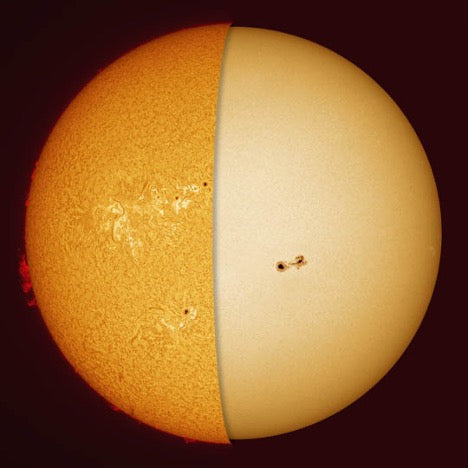
Go Ahead, Look at the Sun (With the Right Equipment)
Solar observation and solar photography are a lot of fun with the right equipment, and this is a great time to start. Every 11 years the Sun’s magnetic field completely flips. That means that the...
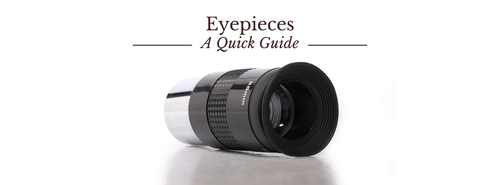
How to Pick the Best Telescope Eyepieces
Finding the right new telescope eyepiece can be a game changer. This post will help you to pick the best telescope eyepiece for your needs.